You are home, but not fully there
Your body has left work, but your attention has not. The people closest to you can feel the distance, even when you are sitting in the same room.
Executive & Life Coaching for High Performers · 45–60
You spent decades becoming the person others rely on. On paper, you have arrived. Yet beneath the surface: quiet exhaustion, strained connection and the unsettling sense that another promotion, deal or asset will not fix what is missing.
You do not need more motivation or another productivity system. You may need the space, structure and honest conversation to do the internal work — without blowing up everything you spent your life building.
Start with a private score, or arrange a direct, no-commitment conversation.45—60
The mid-career summit: outward success, private questions.
The mirror · the unspoken reality
Capability can hide a great deal. Especially from the person carrying it.
Your body has left work, but your attention has not. The people closest to you can feel the distance, even when you are sitting in the same room.
A quiet afternoon should feel like freedom. Instead, you notice the urge to check, fix, plan or prove that you are still useful.
The promotion, deal or milestone gives you a brief lift. Then the pressure returns, and you wonder why enough never feels like enough.
You can see another ten or fifteen years of performing, providing and holding everything together — while feeling less present in the life it was all meant to create.
The golden cage
A golden cage is a successful life that provides status and security but feels restrictive from within. You may fear losing what you have built while also feeling unable to remain fully present in it.
You do not have to burn down the house to fix the plumbing.
It can feel as if the only alternative to this pace is retreat, failure or downgrading the standard of living you worked hard to create. That is a false choice.
Getting happier is not about abandoning ambition; it is an architectural shift — from defensive endurance to intentional living. Audit where energy leaks. Rebuild emotional presence. Recalibrate what genuine fulfilment looks like for the second half of life.
What could become different
Finish a working day without carrying every unresolved problem into the evening.
Be with the people you love without half your attention remaining somewhere else.
Make an important decision from clarity rather than exhaustion, fear or obligation.
Enjoy what you have built instead of spending all your energy protecting it.
The framework
Not a prescribed programme to perform. A structured place to tell the truth, test practical changes and learn what gives you more choice.
01
Notice the rules operating underneath the pressure — “I cannot let anyone down”, “I must stay useful”, “slowing down means losing relevance” — and decide which ones still deserve to govern your life.
02
Look honestly at what work has crowded out. Prepare the conversations, boundaries and small acts of attention that help you become emotionally available again — at home as well as at work.
03
Map the real energy leaks, test changes against your actual responsibilities, and create a way of succeeding that does not require permanent urgency or heroic endurance.
The practical details
Begin with a private, no-obligation 20-minute conversation.
Meet online, with in-person options where appropriate.
Explore exhaustion, identity, relationships, direction and difficult decisions.
Agree practical changes that fit your real responsibilities.
Continue only if Frven’s approach feels right for you.
What this can look like
These illustrative examples describe common situations rather than individual clients. Coaching is shaped around your circumstances and does not guarantee a particular outcome.
The situation: Work is going well, but every unresolved problem follows them home and the people closest to them feel the distance.
A possible focus: Coaching can explore boundaries, identity beyond output and practical ways to become more emotionally present without abandoning responsibility.
The situation: They have built security and status, yet success no longer feels satisfying and changing direction seems too costly.
A possible focus: Coaching can help separate exhaustion from loss of meaning, clarify what matters now and test changes before making a dramatic decision.
About Frven Lim
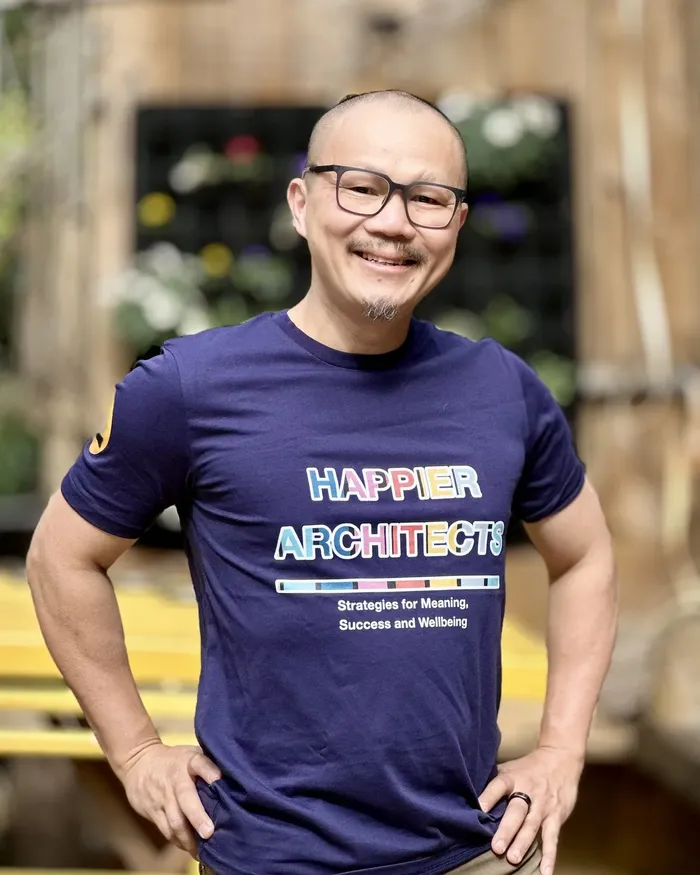
Frven Lim is an architect, author, certified Enneagram practitioner and founder of The Ministry of Happier. Across more than 25 years in high-stakes, deadline-driven environments, he has led teams, carried complex responsibility and seen how easily professional capability can conceal a life under strain.
His understanding is personal, too. Frven has experienced the deepest, darkest place for himself and knows what it is like when the life you have built no longer feels liveable from within. That battle became the foundation of his drive and motivation for this work: he wants to be the coach who could have helped his younger self.
Coaching with Frven is not generic positive thinking. It is a confidential, grounded sounding board to help you deconstruct internal friction and build a life that feels as rich on the inside as it looks on the outside.
25+
years in architecture and professional leadership
7 books
on happiness, professionals, architecture and purpose
IEA
recognised Enneagram practitioner training
Before you decide
No. Many people arrive with a successful life, a persistent unease and no neat explanation. The first conversation is a place to describe what is happening before deciding what, if anything, needs to change.
No. This work is not about abandoning achievement. It is about examining whether your current way of achieving is costing more than it should, then finding a more deliberate and sustainable way forward.
No. This is forward-looking coaching for reflection, decisions and practical change. It does not diagnose or treat mental-health conditions. If you are concerned about your mental or physical health, please speak with a qualified healthcare professional.
Bring the situation as it is. Frven will listen, ask useful questions and help you consider whether coaching is the right support. The discovery conversation lasts around 20 minutes, and there is no obligation to continue.
Frven is based in London and works with people in London, Singapore and internationally. Coaching can take place online, with in-person options where appropriate.
Your coaching is treated as private and focused on your situation. WhatsApp is a third-party service, so avoid putting sensitive health or personal information in your first message; you can share only enough to arrange a conversation.
The discovery step
You do not need a diagnosis, a perfectly formed goal or a plan for changing your whole life. Bring the situation as it is. Share only what feels comfortable, and let’s arrange a 20-minute, no-pressure conversation to see whether this work is right for where you are today.
No automated bots and no high-pressure sales pitch. Your first message can be as simple as: “I am not sure how to explain it, but something needs to change.”
Coaching is a private, forward-looking space for reflection and practical change. It is not medical care or psychotherapy and does not guarantee a particular outcome. If you are concerned about your mental or physical health, please seek support from a qualified healthcare professional.